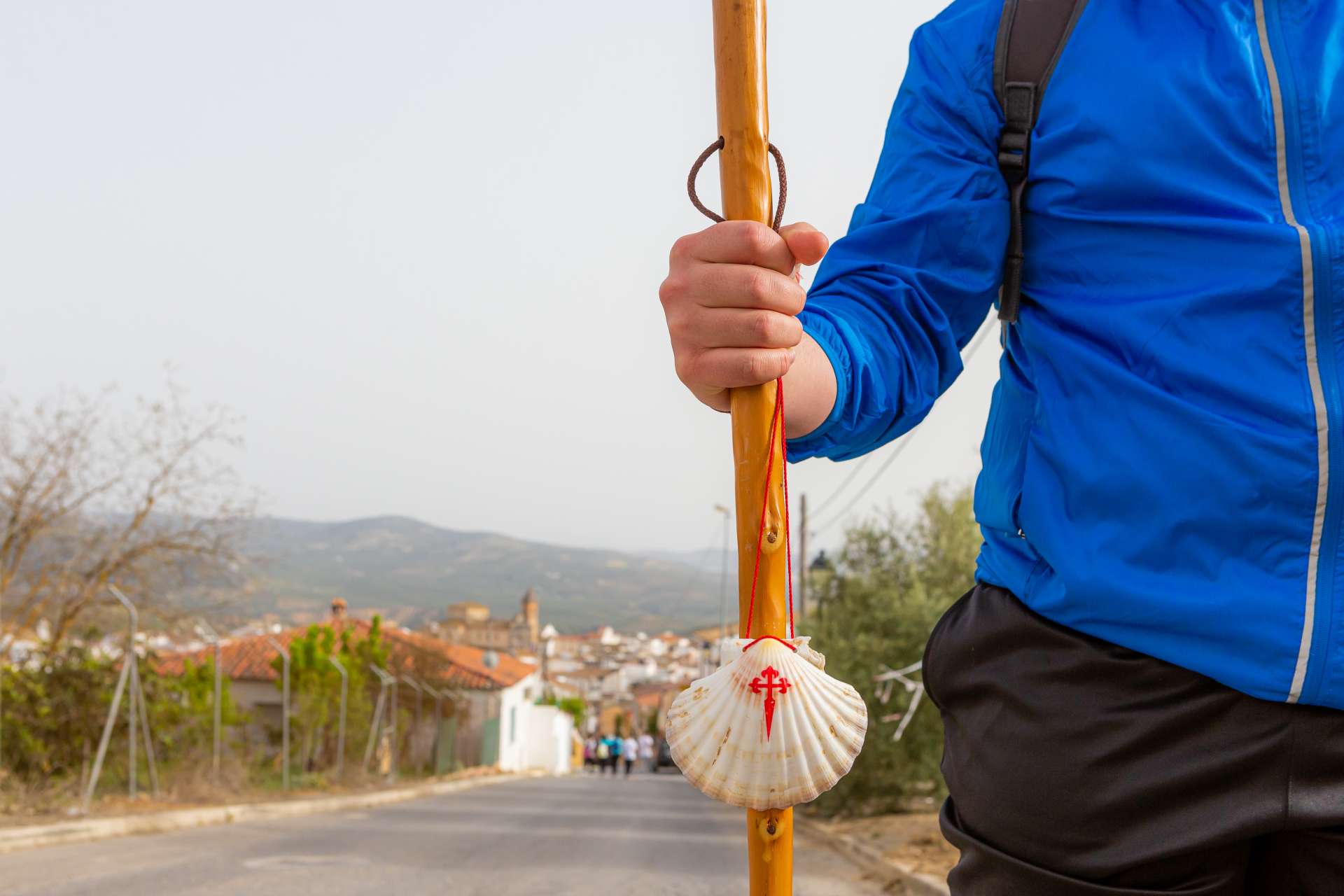
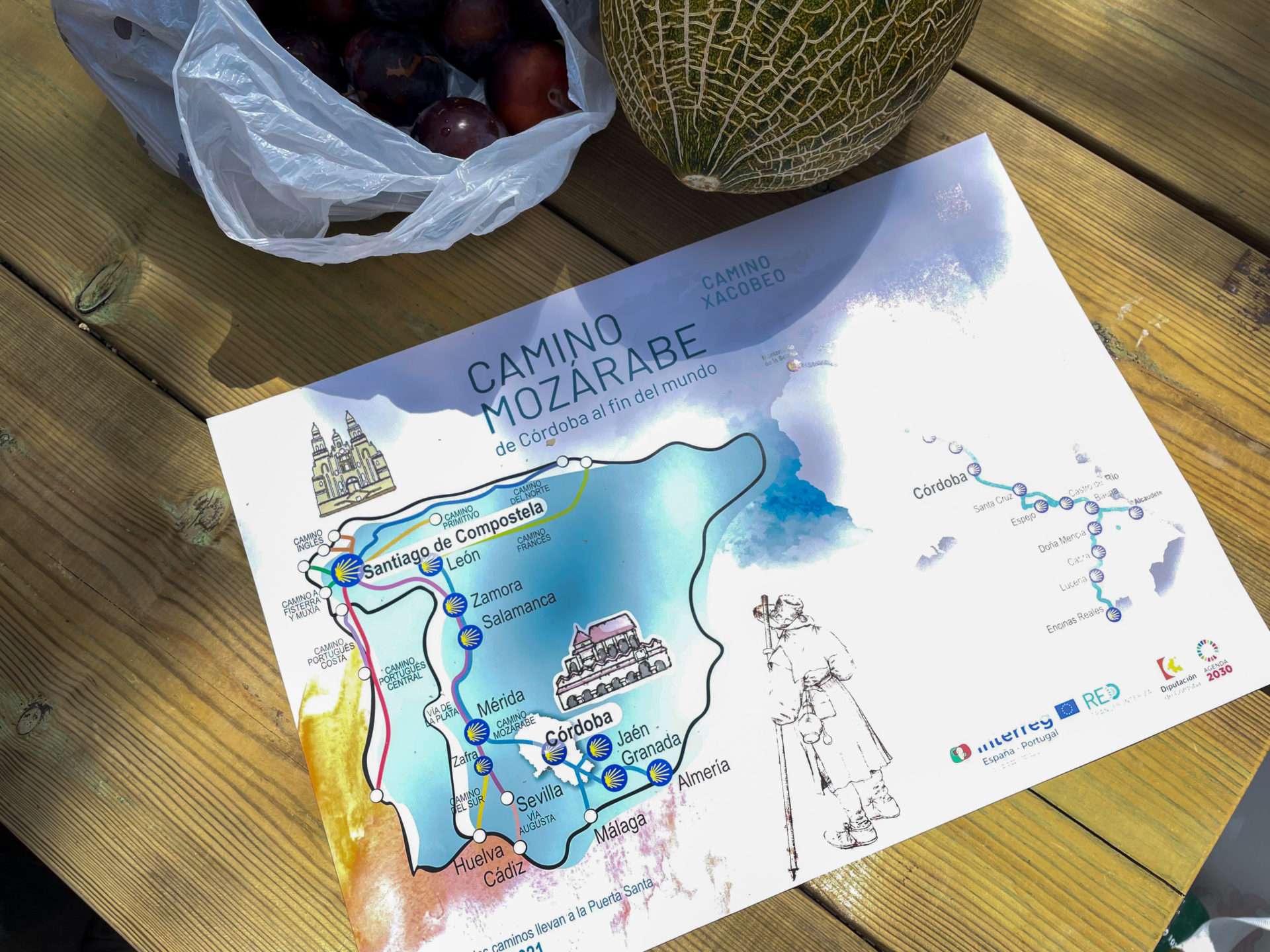
The Mozarabic Way of Saint James (Camino Mozárabe) is one of the great pilgrimage routes to Santiago de Compostela, crossing Andalusia and connecting southern Spain with the Via de la Plata. Its route follows ancient paths that have been used for centuries to connect the cities and territories of Al-Andalus. Today, it offers a unique experience combining history, heritage, nature and culture.
As it crosses the Subbética Cordobesa, the route offers a varied journey through olive groves, rural tracks, former railway infrastructure and some of the most characteristic landscapes of central Andalusia. The route passes through the municipalities of Encinas Reales, Lucena, Cabra, Doña Mencía and Baena, allowing pilgrims to discover a region deeply shaped by olive growing, historical heritage and the identity of its towns.
The route is signposted with the traditional yellow arrows and Jacobean symbols and can be completed on foot in stages. The section through the Subbética is currently divided into four stages:
🟢 STAGE 09 · ENCINAS REALES → LUCENA
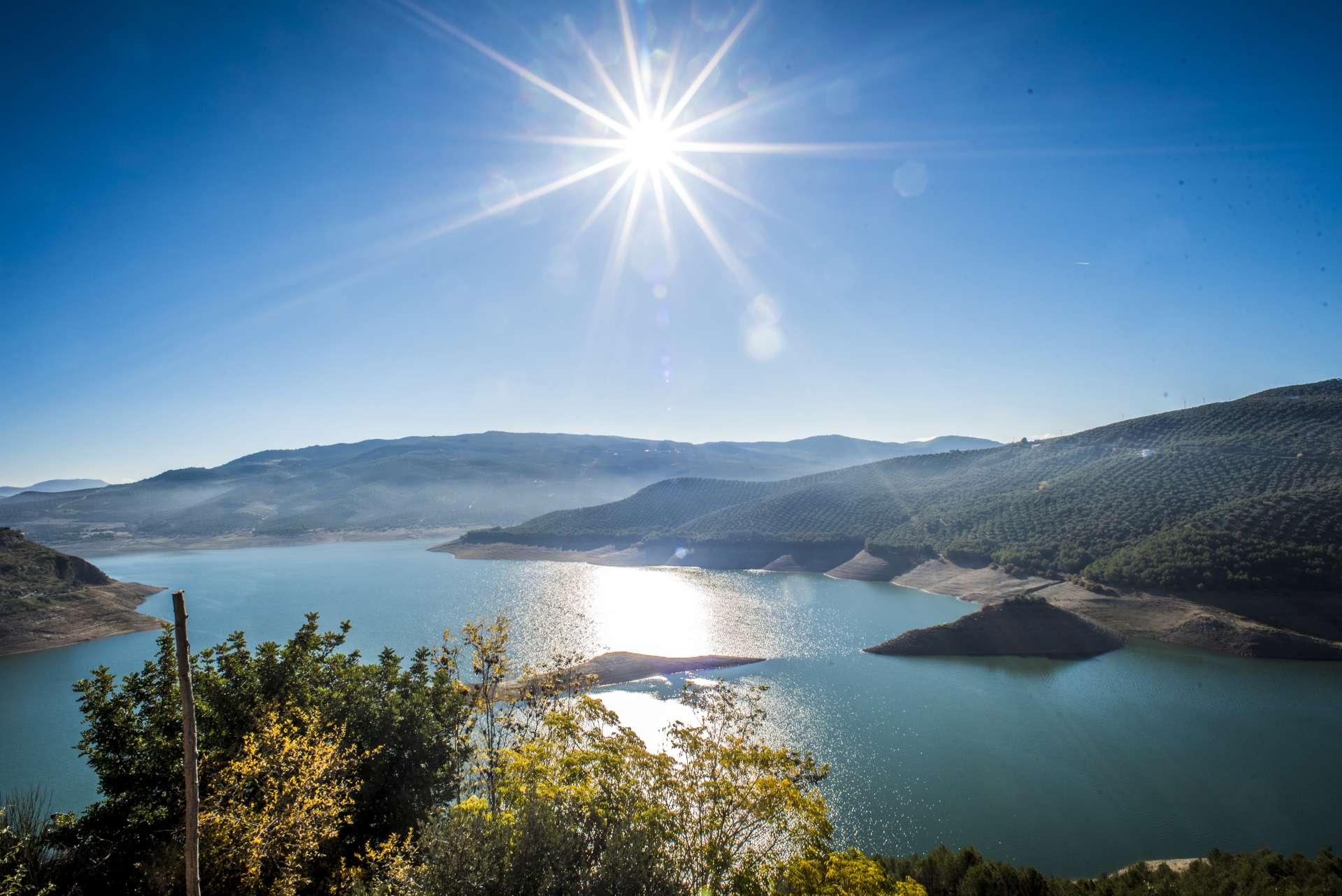
A route of approximately 20.3 km connecting Encinas Reales and Lucena along rural and agricultural tracks. The stage crosses the surroundings of the Anzur River, one of the main natural features of the route.
After leaving Encinas Reales along the old road to Lucena, the route crosses underneath the motorway and continues towards the Anzur River. After crossing the river, the Camino continues through olive groves and agricultural landscapes before gradually approaching Lucena.
This is a moderate stage, with some changes in elevation and several crossings or sections close to roads. The approach to Lucena takes place through the town's outskirts and railway area.
🟢 STAGE 10 · LUCENA → CABRA
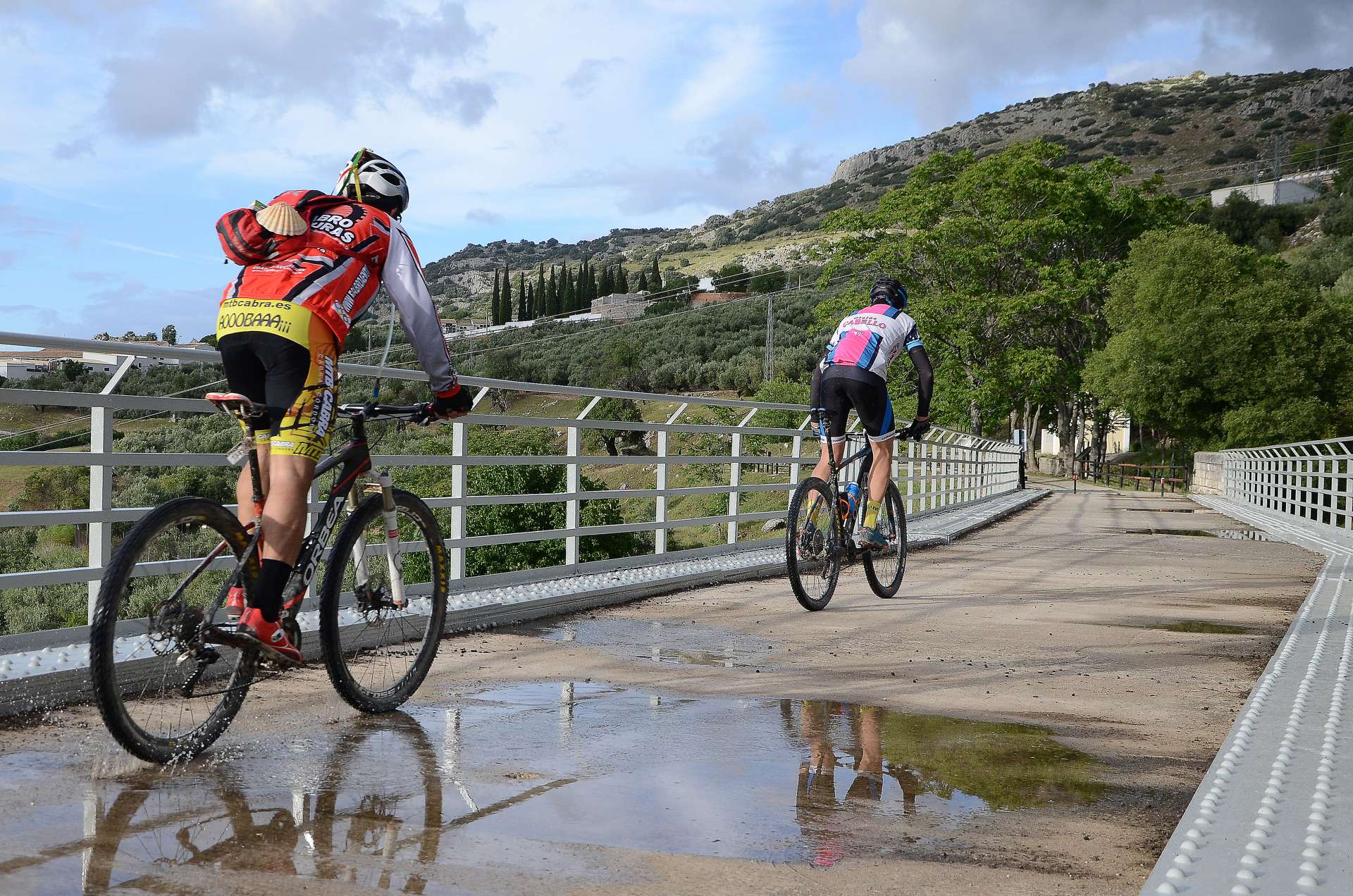
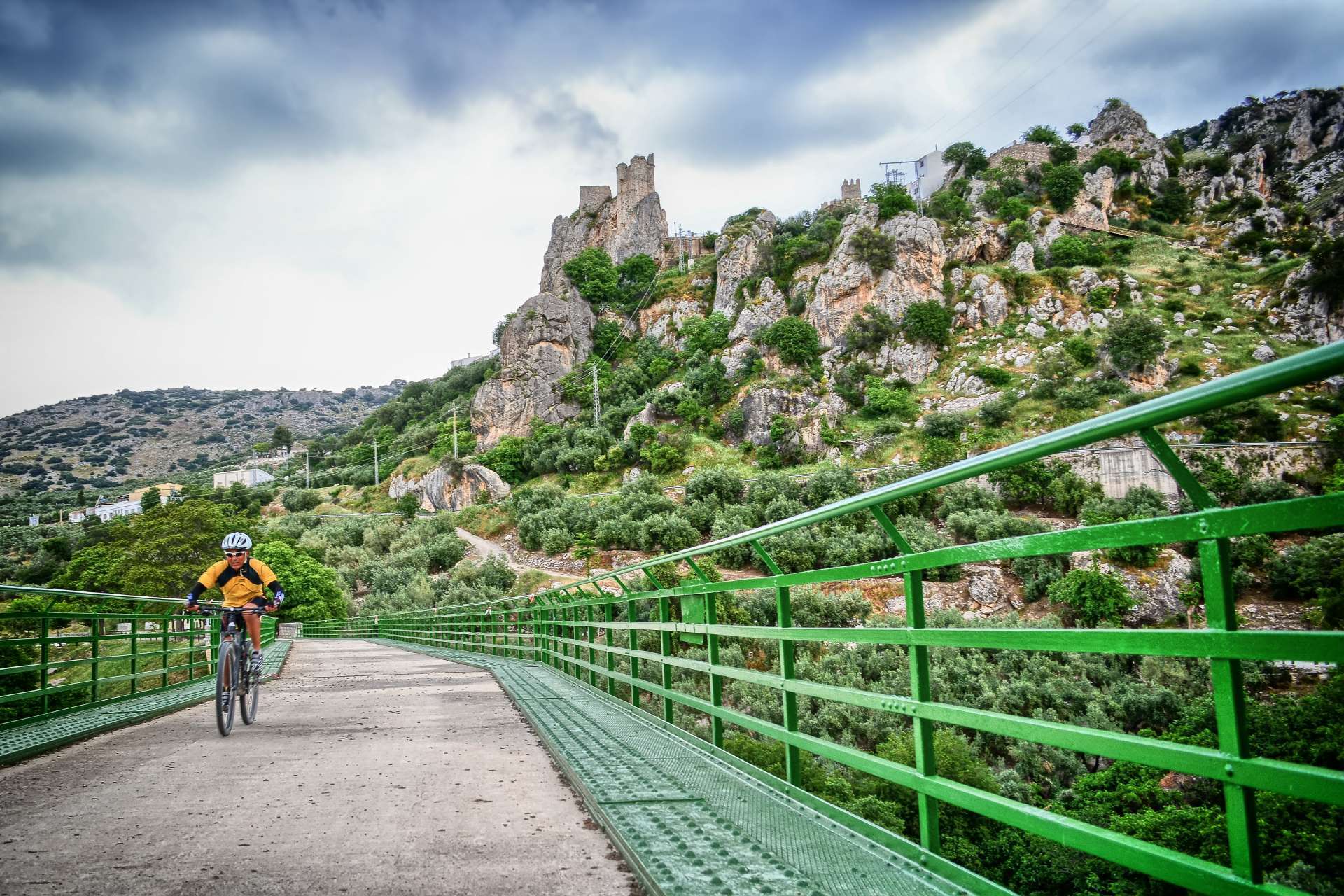
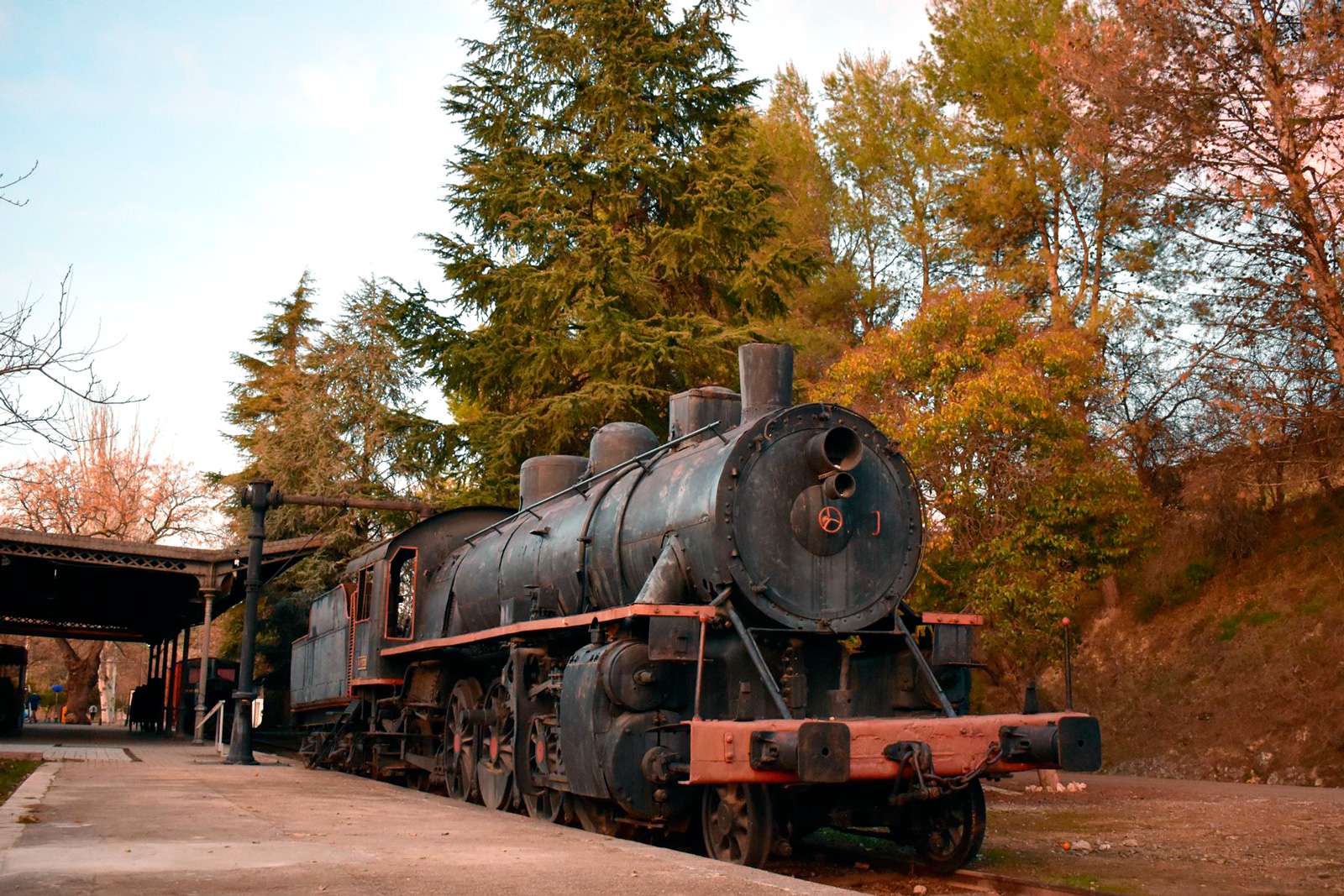
Between Lucena and Cabra, the Mozarabic Way becomes a pleasant experience closely linked to the railway heritage of the Subbética. The stage is approximately 12.6 km long and largely follows the Subbética Greenway (Vía Verde de la Subbética), built on the former railway line known as the Olive Oil Railway.
The route starts at the former Lucena railway station and follows an easy, clearly defined and almost flat path through an open landscape dominated by olive groves.
The stage ends at the former Cabra railway station, home to the Olive Oil Railway Interpretation Centre. From there, a final uphill section leads to the first houses of Cabra.
This is an easy stage, particularly suitable for those wishing to enjoy the landscape and railway heritage of the region without significant technical difficulties.
🟢 STAGE 11 · CABRA → DOÑA MENCÍA
The Camino continues from Cabra to Doña Mencía for approximately 13.85 km, once again following the route of the Greenway of the former Olive Oil Railway.
The stage starts at the former Cabra railway station and follows an easy, clearly marked route. There is a gentle, progressive climb, while the landscape gradually opens up, offering wide views over the surrounding Subbética.
The route reaches the former Doña Mencía railway station, from where the town centre can be accessed via an underground crossing beneath the C-327 road.
A moderate stage characterised by the tranquillity of the Greenway and the close relationship between the Mozarabic Way and the railway heritage of the region.
🟢 STAGE 12 · DOÑA MENCÍA → BAENA
The final stage through the Subbética connects Doña Mencía and Baena over approximately 8.88 km.
The Camino gradually leaves the Greenway and continues along the former Camino de Balachar and a series of rural tracks. Leaving Doña Mencía involves a steep climb of more than one kilometre, after which the route becomes gentler until reaching the CV-327 road.
After a short section along the road, the Camino returns to rural tracks and descends towards the Fuente de los Siete Caños, near Baena. From there, the urban section leads to Plaza de España and Llano del Rincón.
Baena is also an important junction on the route, from where the Camino continues towards Castro del Río and connects with the Mozarabic Way coming from Granada.
🌿 A route to discover the Subbética
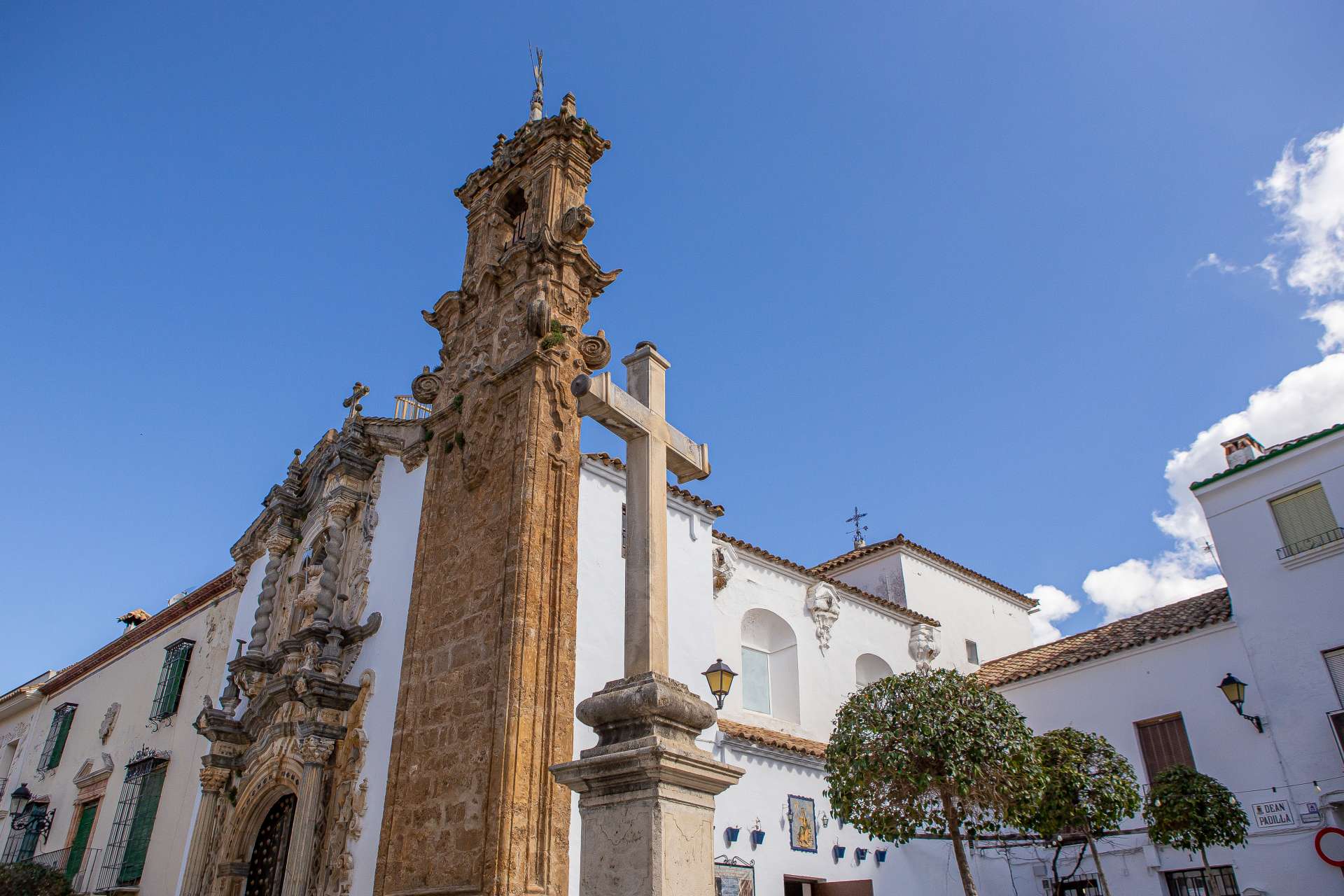
Walking the Mozarabic Way through the Subbética Cordobesa is much more than completing a pilgrimage route. It is an opportunity to immerse yourself in a land where olive groves, white villages, the Greenway, ancient paths and historical heritage come together to create a unique experience.
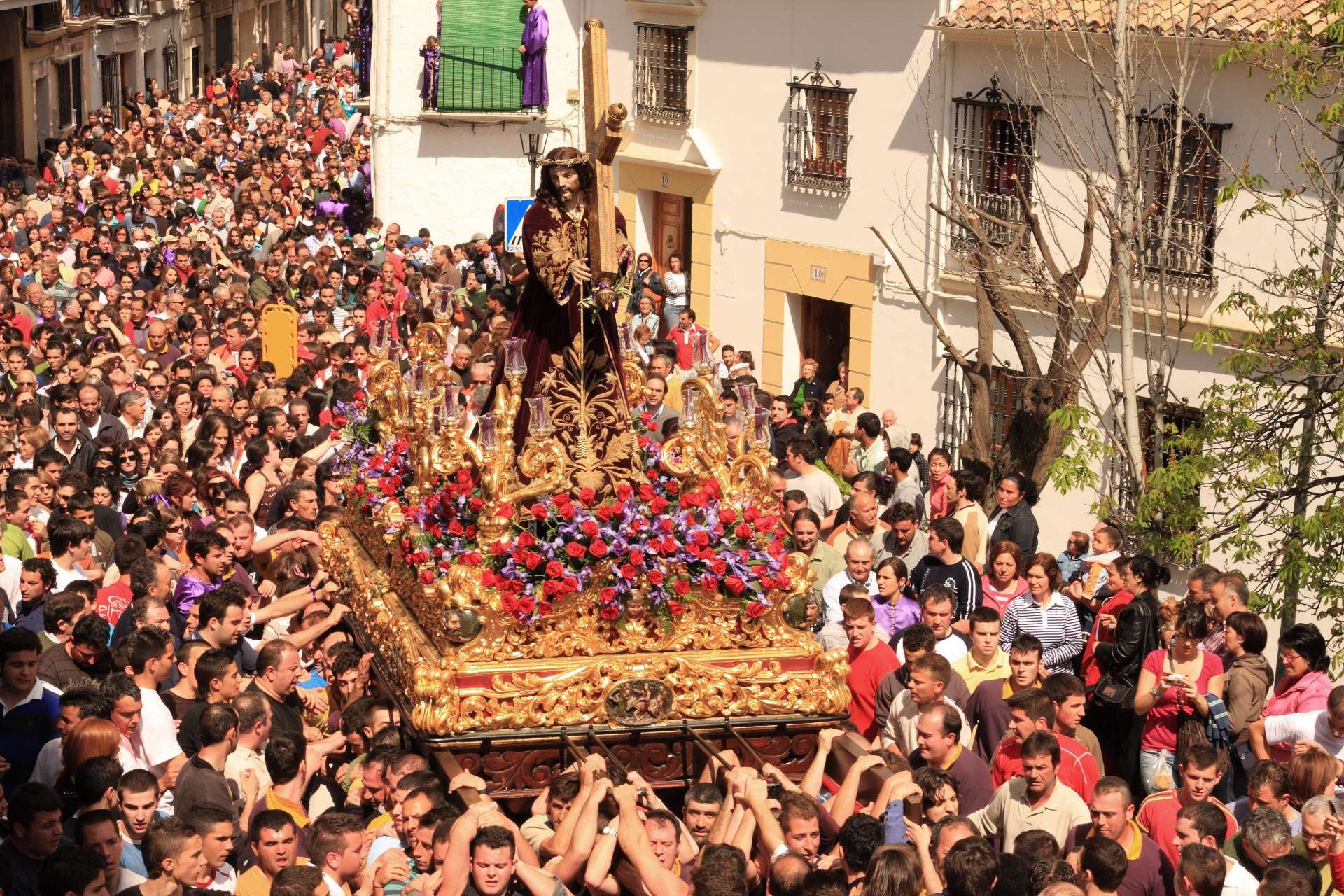
Throughout the route, pilgrims can discover the identity of a region deeply connected to olive oil, gastronomy, heritage and the hospitality of its towns.
The Greenway plays a particularly important role between Lucena, Cabra and Doña Mencía, while the sections between Encinas Reales and Lucena and between Doña Mencía and Baena reveal rural landscapes and agricultural tracks that showcase another side of the Subbética.
🎒 Practical information for pilgrims
The Camino is a linear route signposted with yellow arrows and Jacobean symbols. The four stages have different levels of difficulty, ranging from easy, almost flat routes to stages with more significant elevation changes.
It is advisable to carry enough water, especially on rural sections and during the warmer months, and to take care at road crossings and sections shared with traffic.
Spring and autumn offer particularly pleasant conditions for walking the route and enjoying the landscapes of the Subbética.
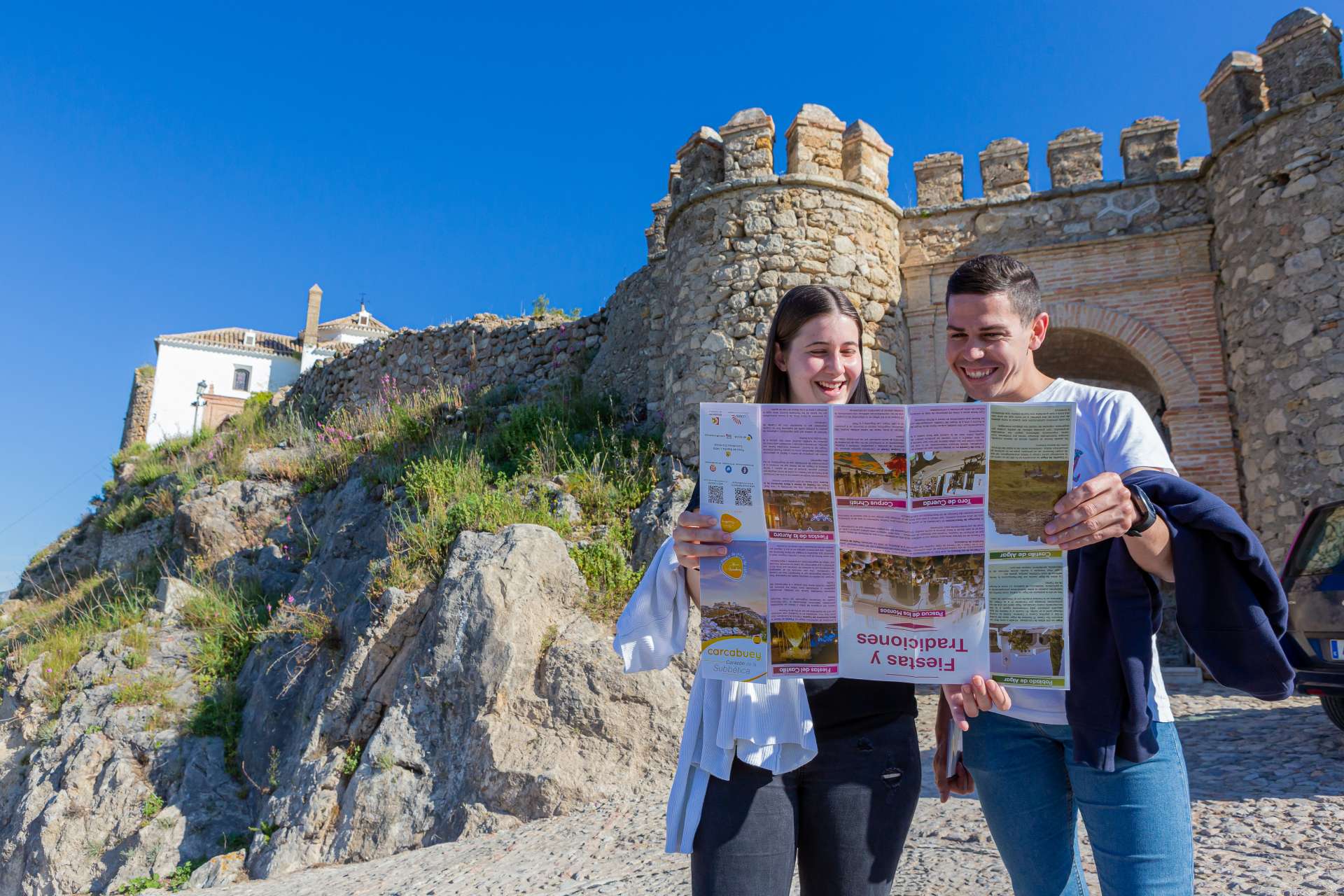
And above all, remember that the Camino is not simply about reaching Santiago: every stage is an opportunity to stop, discover our towns, learn about our history and experience the essence of the Subbética Cordobesa.
Buen Camino! See you in the Subbética! 🥾🌿💛